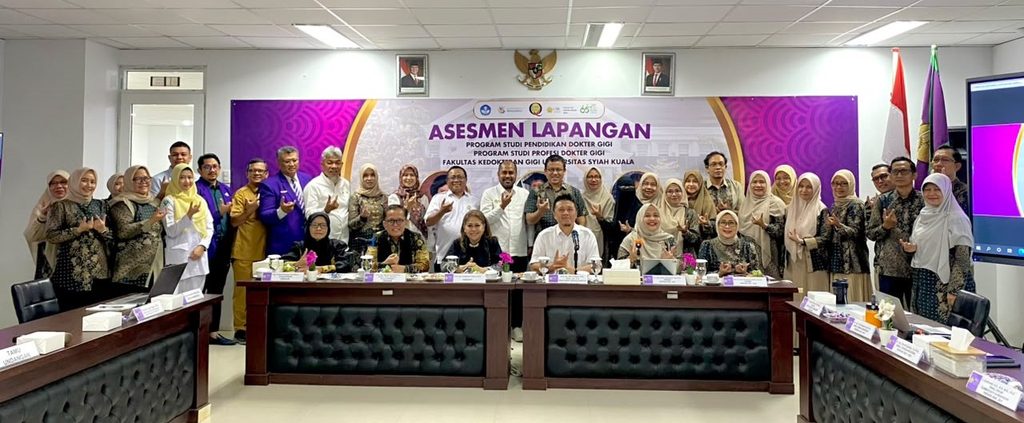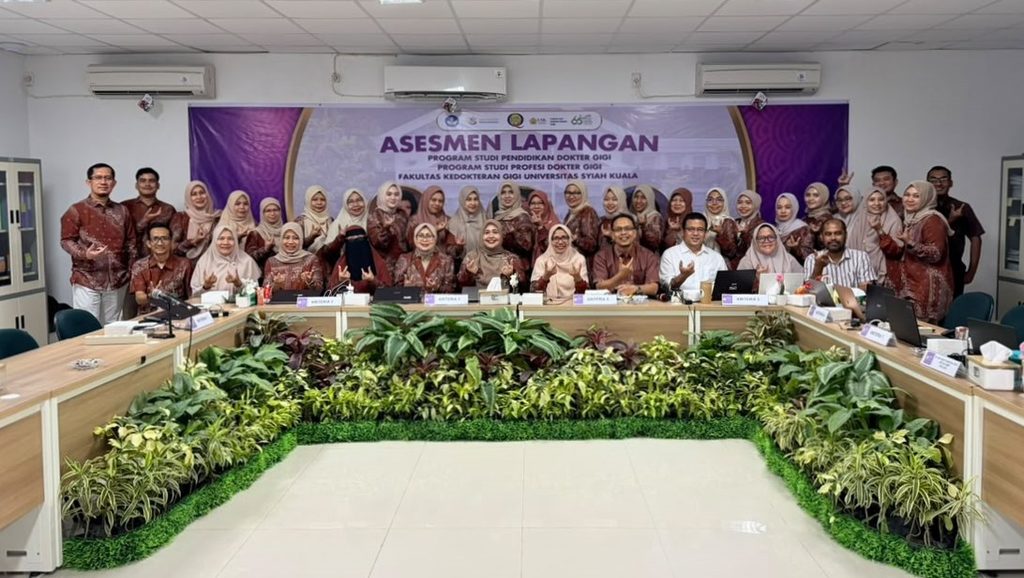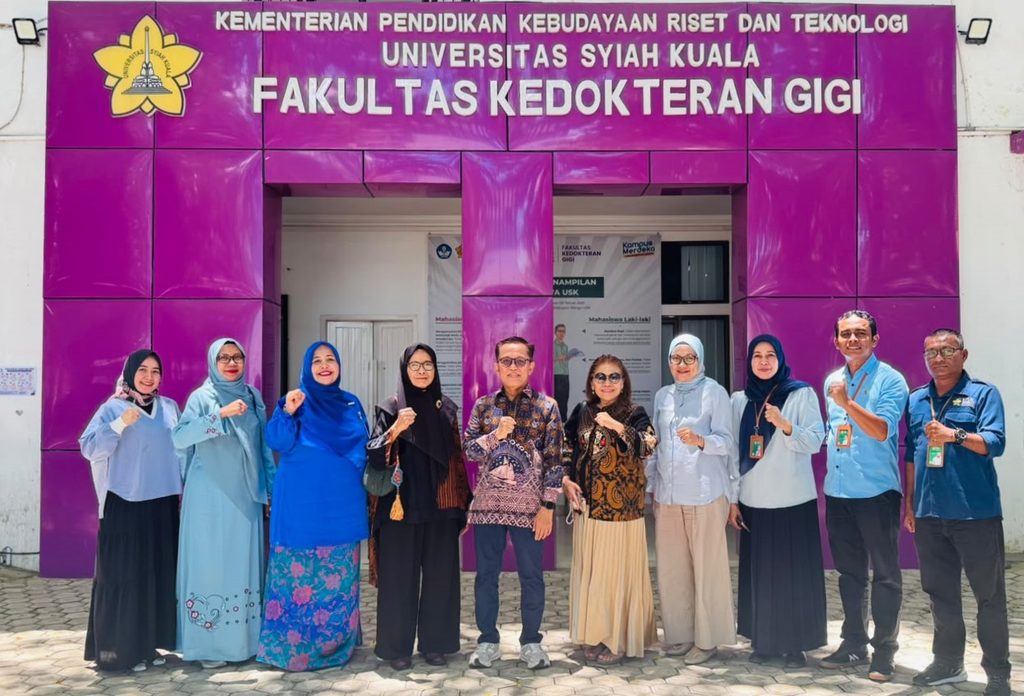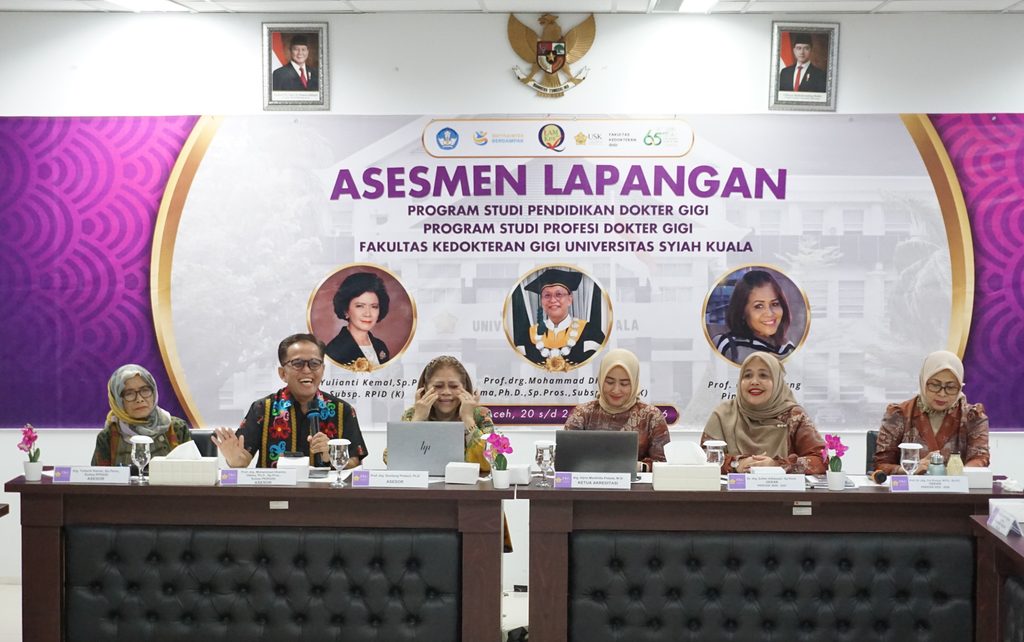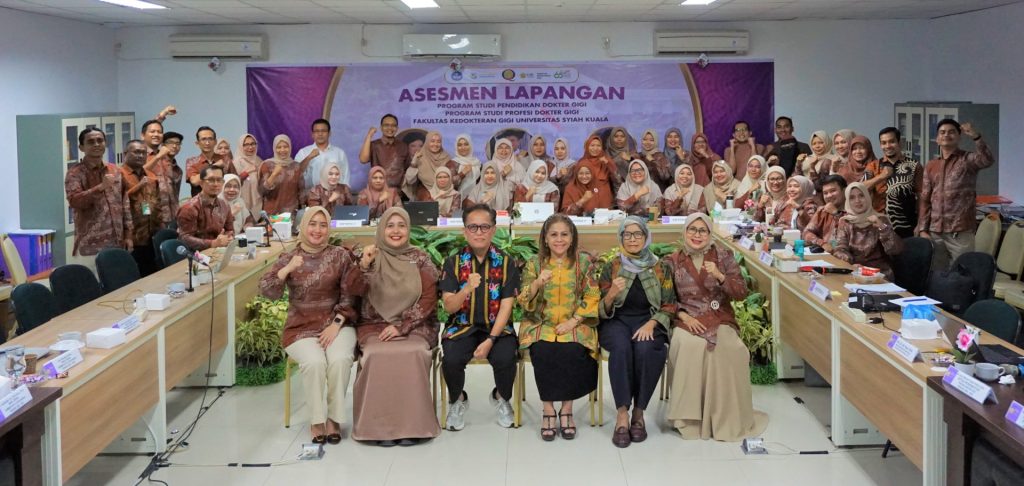
The Faculty of Dentistry (FKG) at Universitas Syiah Kuala (USK) underwent an accreditation assessment conducted by the Indonesian Accreditation Agency for Higher Education in Health (LAM-PTKes). Held from September 21–23, 2026, the on-site assessment was an important part of the evaluation of the quality of dental education at FKG USK.
The LAM-PTKes assessment team consisted of Prof. drg. Muhammad Dharma Utama, Ph.D., Sp.Pros., Subsp.PKIKG (K), Prof. drg. Sondang Pintauli, Ph.D., and drg. Yulianti Kemal, Sp.Perio., Subsp. RPID (K).
The assessment involved the verification of various aspects of educational delivery, governance, human resources, learning processes, research, community service, facilities and infrastructure, as well as other supporting components within the dental education ecosystem.
More Than an Assessment: A Momentum for Improvement
In the Rector of USK’s remarks, delivered during the opening of the assessment, the university emphasized that the on-site assessment serves as an opportunity to evaluate the extent to which policies and programs that have been implemented contribute to institutional development.
USK also reaffirmed its full support for the continued development of FKG, including in the areas of academic affairs, human resources, facilities and infrastructure, learning quality, research, community service, and the strengthening of institutional partnerships and networks.
Assessment as a Space for Reflection
Dean of FKG USK, Dr. Drg. Zulfan Alibasyah, Sp.Perio, emphasized that the on-site assessment should not be viewed solely as an evaluation process aimed at obtaining accreditation status. More importantly, the presence of the assessors provides FKG USK with an opportunity to gain valuable perspectives, input, and recommendations from experts that can serve as a foundation for the faculty’s future development.
Meanwhile, the Head of the FKG USK Accreditation Committee, drg. Hijria Mardilla Pidada, M.Si., expressed the committee’s commitment to providing information and data openly, objectively, and transparently throughout the assessment process.
Assessing the Dental Education Ecosystem
Dental education has a complex and distinctive learning environment, as the educational process extends beyond the classroom. Clinical education requires support from hospitals, dental hospitals, healthcare facilities, as well as various partners and stakeholders.
Assessment Continues at RSGM, Community Health Center, and USK Library
On Tuesday, September 22, 2026, the on-site assessment continued with visits by the assessment team to several facilities supporting the implementation of dental education. The team conducted assessments at the Dental Hospital (RSGM), the Objective Structured Clinical Examination (OSCE) facilities, laboratories, Kopelma Darussalam Community Health Center (Puskesmas), and the Universitas Syiah Kuala Library.
Moving Toward an Adaptive and Impactful Faculty
The plenary session and clarification process held on September 23, 2026, served as an important momentum for FKG USK to further strengthen its governance and quality culture.
The faculty’s development is directed not only toward achieving professional competencies among graduates, but also toward improving administrative processes and developing graduates who demonstrate integrity, social responsibility, adaptability, and readiness to respond to advances in science and technology.
For the new leadership of FKG USK, the recommendations resulting from the assessment are expected to serve not merely as notes on leadership competencies, but also as strategic input for strengthening collaboration and synergy across various areas of the faculty’s future development.
Concluding the interview, the Dean of FKG USK emphasized that the accreditation process through the LAM-PTKes assessment is not merely an evaluation of achievements to date. It is also an opportunity for reflection to strengthen the foundation of quality, improve governance, and establish a sustainable direction for the development of FKG USK.
FKG USK views this process as part of its ongoing journey toward becoming a stronger, more adaptive, and excellent faculty, while continuing to make meaningful contributions to the improvement of oral and dental health in the community.